Tuesday, May 29, 2012

ENRICHING THE MIDDLE EAST’S ECONOMIC FUTURE CONFERENCE, DOHA FORUM (20-22 MAY 2012), QATAR

Following are photos of the 12th Doha Forum in Qatar 
(20-22 May 2012)


John Nomikos, President of RIEAS and Antonia Dimou, Associate of CMED, UCLA members of a panel on the Arab Peace and the Israeli Peace Initiatives

Panoramic View of the Opening of Doha Forum and the Enriching the Middle East’s Economic Future Conference. Opening Speech by HH Sheikh Hamad Bin Khalifa al-Thani. Emir of the State of Qatar


Opening Speech by HH Sheikh Hamad Bin Khalifa al-Thani. Emir of the State of Qatar

Workshop No 6 on “Why Did Greece Collapse?”, Chaired by Antonia Dimou, Associate of the CMED, UCLA; Speakers: Prof. Panayiotis Petrakis, National and Kapodistrian University of Athens, Alexander Moraitakis, president of NUNTIUS Financial Company, Prof. Nikolaos Milonas of the National and Kapodistrian University of Athens, and Sven Behrendt, Founder and Managing Director, Geo Economica, Switzerland.
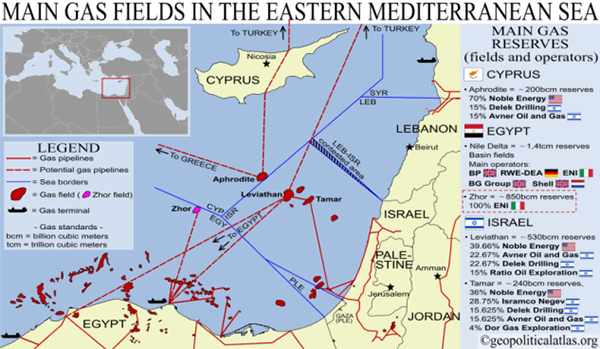
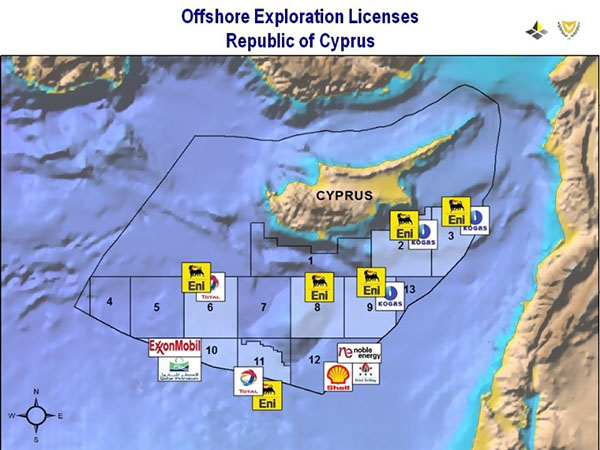
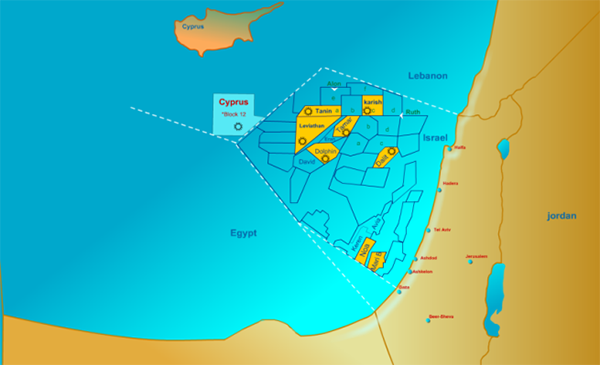
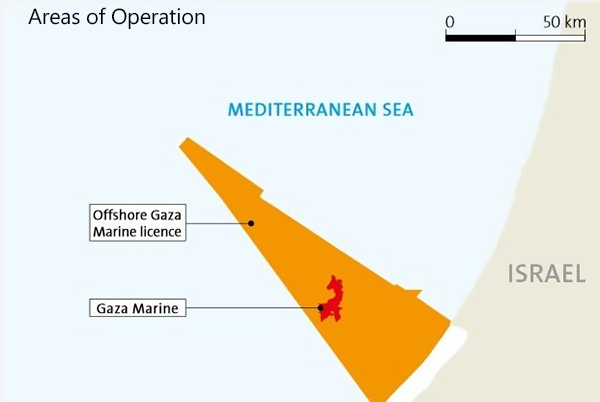
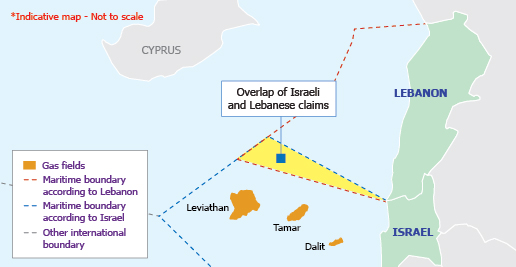
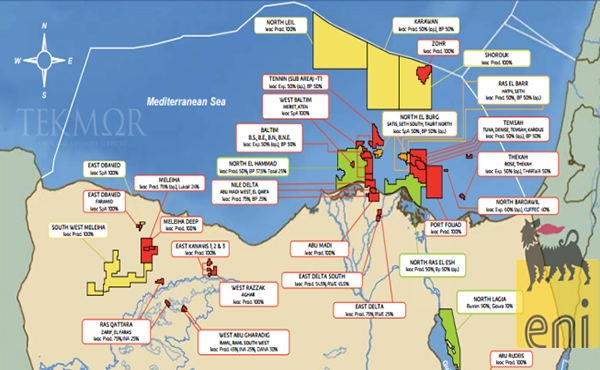
Overview of the Workshop No. 10 on “Gas Fields in the Eastern Mediterranean”
Workshop No. 10 on “Gas Fields in the Eastern Mediterranean”. Speakers John Nomikos, President of RIEAS, Greece, and Ilan Mizrahi, President and CEO of TATOOM Consulting, Israel
Overview of Workshop No. 10 on “Gas Fields in the Eastern Mediterranean”
Workshop No. 10 on “Gas Fields in the Eastern Mediterranean”. Chairs: Jay Footlik and Mac Bernstein, USA. Spekers: Christodoulos Pelaghias, Chairman of ERPIC, Cyprus;
Ilan Mizrahi, President and CEO of TATOOM Consulting, Israel; John Nomikos, President of RIEAS, Greece

Panel Overview of the Workshop No. 10 on “Gas Fields in the Eastern Mediterranean”.


Overview of the Workshop No. 10 on “Gas Fields in the Eastern Mediterranean”


Source: http://rieas.gr/images/cmed.pdf


Monday, May 28, 2012

DOHA FORUM, ENRICHING THE MIDDLE EAST’S ECONOMIC FUTURE CONFERENCE, (20-22 MAY 2012), QATAR


Monday, 21st May 2012

11:00-12:30 
CMED Salwa (1, 2) 

Workshop (6): Why Did Greece Collapse? 

Chair: Antonia Dimou

Speakers:

- Panayiotis Petrakis, Chair of the Department of Development and International Economics of the National Kapodistrian University of Athens, Greece

- Alexander Moraitakis, President, NUNTIUS Financial Company, Greece

- Nikolaos Milonas, Professor of Finance, National and Kapodistrian University of Athens, Greece

- Sven Behrendt, Founder and Managing Director, Geo Economica, Switzerland

The full programme of the Doha Forum can be accessed at:

Saturday, May 26, 2012

Το Ελληνικό Εθνικό περίπτερο στη SOFEX 2012


25-05-2012 14:55:02

ΠΗΓΗ: Defencenet.gr 

Η DEFENSYS οργάνωσε με μεγάλη επιτυχία όπως δείχνουν τα αποτελέσματα, το Ελληνικό Εθνικό Περίπτερο στην 9η Έκθεση Ειδικών Δυνάμεων “SOFEX 2012”, η οποία πραγματοποιήθηκε υπό την αιγίδα του Βασιλιά Abdullah II, την προεδρία του Πρίγκιπα Feisal Bin Al Hussein και με την πλήρη υποστήριξη των Ενόπλων Δυνάμεων της Ιορδανίας, από τις 8 έως τις 10 Μαΐου 2012 στο Αμμάν.

Το Ελληνικό Εθνικό Περίπτερο διοργανώθηκε με την πλήρη υποστήριξη της Γενικής Διεύθυνσης Αμυντικών Επενδύσεων και Εξοπλισμού (ΓΔΑΕΕ) του Υπουργείου Εθνικής Άμυνας. Στη SOFEX 2012 συμμετείχαν έξι αμυντικές βιομηχανίες παράλληλα με τη DEFENSYS, η ΕΛΛΗΝΙΚΗ ΑΕΡΟΠΟΡΙΚΗ ΒΙΟΜΗΧΑΝΙΑ, τα ΕΛΛΗΝΙΚΑ ΑΜΥΝΤΙΚΑ ΣΥΣΤΗΜΑΤΑ, η ΕΛΛΗΝΙΚΗ ΒΙΟΜΗΧΑΝΙΑ ΟΧΗΜΑΤΩΝ, η ELMON, η ΠΥΡΓΟΣ και η SIELMAN ΑΕ.

Οι ελληνικές εταιρίες, οι οποίες αποσκοπούν στην προώθηση των αμυντικών προϊόντων και υπηρεσιών τους, καθώς και στην ενίσχυση των διεθνών δραστηριοτήτων τους και στην αύξηση των εξαγωγών τους, είχαν την ευκαιρία να συναντηθούν με την ηγεσία της χώρας υποδοχής, το βασιλιά της Ιορδανίας Abdullah II, τον Πρίγκιπα Feisal Bin Al Hussein, τον πρίγκιπα Hamzah Bin Al Hussein, τον Αρχηγό ΓΕΕΘΑ, τον Αρχηγό του Γενικού Επιτελείου Στρατού, τον Αρχηγό του Επιτελείου Αεροπορίας, τον Αρχηγό της Αστυνομίας της Ιορδανίας, τους διευθυντές Αεράμυνας, Επικοινωνιών, & Εξοπλιστικών Προγραμμάτων, καθώς και πολλές υψηλόβαθμες κυβερνητικές και ξένες αντιπροσωπείες των Ένοπλων Δυνάμεων και εμπορικούςεπισκέπτες.

Αυτή ήταν η πρώτη φορά που οργανώθηκε Ελληνικό Εθνικό Περίπτερο σε έκθεση άμυνας, μια πολύ σημαντική και επιτυχημένη προσπάθεια από τη DEFENSYS σε μια περίοδο όπου οι ελληνικές εταιρείες προσανατολίζονται στην εξωστρέφεια για την  αντιμετώπιση της οικονομικής κρίσης. 


Sunday, May 6, 2012

THE PENNSYLVANIA STATE UNIVERSITY: Palestinian Territories

Reference to an article written by Antonia Dimou


Background Information:

  There are two areas which are considered go be part of the Palestinian Authority (PA). They include the areas known as the West Bank and the Gaza Strip. The President of the Palestinian Authority or PA is Mahmud Abbas, who was elected in 2005.
 
   These territories were placed under Palestinian rule in September 1993 through the "Israel-PLO Declaration of Principles on Interim Self-Government. Arrangements provided for a transitional period of Palestinian self-rule" (Central Intelligence Agency). The agreement placed the areas under Palestinian control for 5 years, after which a permanent agreement would be negotiated. By 1999, Israel had transferred "security and civilian responsibility" of the Palestinian-populated areas to the PA, but negotiations over what would become of the the two territories were stalled due to an "intifada", which is a period of intensified Palestinian-Israeli violence, in September 2000. In 2005, Israel removed all troops and 21 settlements from the Gaza Strip for the first time since 1967. The strip was considered to be under Palestinian control, but under the terms of the agreement made, Israel continued to control the "external perimeter" which includes airspace, activity in the sea off the strip, and the border of Eqypt and Gaza. Israel also gained the ability to control the movement of goods into Gaza and the taxation system, through agreements made between PA and Israel.There is still great conflict between the Palestinians and the Israeli's over the creation of a Palestinian state. 

 
Gaza Strip:


According to the CIA World Factbook, the Palestinian territories are located in Middle East, bordering the Mediterranean Sea, between Egypt and Israel.  The area of the Gaza strip is 360 square kilometers, which is about the size of 2 Washington D.C's. Some of the environmental issues in the area include "desertification, salination of fresh water, sewage treatment, water-borne diseases, and depletion and contamination of underground water resources." The population of this area is about 1.6 million. 99.3% of the population is Muslim and .7% is Christian, and are known as the Palestinian Arabs who speak mainly Arabic and Hebrew. 360,000 people out of 1.5 million have access to internet and telephones. 70% of the population is below the poverty line and 40% of the population is unemployed. 92.4% of the population is literate above the age of 15. Some of the major agriculture products include olives, flowers, fruit, vegetables, beef and dairy products. The industries are mainly involved in textiles and food processing. 

 
West Bank:


According to the CIA World Factbook, The West Bank is also in the Middle East and located to the west of Jordan. The area is 5,860 square kilometers (approximately the size of Delaware). The land is arable, but suffers from droughts similar to the Gaza Strip. The two main environmental issues include "adequacy of fresh water supply and sewage treatment." The population is approximately 2.5 million. Eighty-three percent of the population are Palestinian Arab and 17% are Jewish, while 75% are Muslim, 17% are Jewish and 8% are considered "other". The predominate language spoken is Arabic. The literacy rate is 92.4% above the age of 15, which is the same as Gaza Strip. Fortunately, the unemployment rate is much lower than Gaza Strip at 19%, and 46% of the population is below the poverty line compared to Gaza's 70%. This area's agricultural products are the same as the Gaza Strip, but the major industries include "small-scale manufacturing, quarrying, textiles, soap, olive-wood carvings, and mother-of-pearl souvenirs".


Articles 


1. Israeli's Second Disengagement of Gaza
     by Antonia Dimou (August 13, 2010)


   This article discussed the proposal made by Israeli Foreign Minister, Avigdor Lieberman, for a second disengagement from Gaza. The proposal "works to secure E.U cooperation to rebuild the Gaza Strip and relinquish all Israeli responsibility for Gaza including the lifting of the naval blockade on it". 
 
    The author of the article discusses how the Gaza Strip and West Bank are considered as a "single territorial entity" and that both Israeli and Palestinian parties are quoted saying just that. She finds it "legally profound" that because Israel contains control over West Bank, that under Article 42 of the Hague Regulations, Gaza will continue to be occupied territory. The Article states "territory is considered occupied when it is actually placed under the authority of the hostile army. The occupation extends only to the territory where such authority has been established and can be exercised" (International Committee of the Red Cross). Therefore, Gaza is going to continue to be considered an Israeli occupied territory due to Israel control over the West Bank.
 
    The author, Antonia Dimou, believes there are "two major issues that need to be addressed before an Israeli disengagement takes place". The first is the possibility of a "humanitarian disaster", and the second is about the steps that need to be taken to prevent an "intractable security problem". Egypt may also play a role in the flow of goods into Gaza, but both sides have reservations on working together from past disputes.
 
  In the final words of the article, Palestinians need to unite together as one voice, and only then will they begin to prosper in their efforts for equality. 


2. Middle East Leaders in Direct Talks
 Aljazeera.net (September 14, 2010)


   Israeli and Palestinian leaders recently met in Egypt for a "second round of US-brokered direct negotiations against a backdrop of continued differences over Israel's plan to build more illegal Jewish settlements on Palestinian land". There has been no evidence that a compromise has been reached between the Israeli Prime Minister, Binyamin Netanyahu, and the Palestinian leader, Mahmud Abbas, who are said to be in need of a "serious discussion on core issues" including "Israel's security, the borders of a future Palestinian state, the fate of Palestinian refugees and the future of Jerusalem." The article states that the U.S believes that there is a possibility for a peace deal between the two nations within the next year. Both Barak Obama and Hilary Clinton have called for a 10 month "moratorium" or legal authorized period of delay, on the illegal settlements, and also say that an "agreement could be forged between both the Israelis and the Palestinians on actions that could be taken by both sides that would enable the negotiations to continue". According to the article, the Palestinians have stated that they will not continue further negotiations with Israel if there is no moratorium. 
 
  Despite the conflict emerging, Israel has continued to build new Jewish settlements in East Jerusalem, which is the proclaimed capital of the Palestinian Authority. Many believe that due to the continued building, and Israel's refusal to discontinue, the creation of a Palestinian state "does not look promising". Ultimately, the "Palestinians want a state in the West Bank and Gaza Strip, with East Jerusalem as its capital. Netanyahu, has embraced a two state solution, but has shown no sign on yielding on Jerusalem as the undivided capital of the Jewish state". 


3. PM begins Trilateral Meeting, says "There is a lot of work"
by Herb Keinon (September 15, 2010)


   Talks began in Jerusalem on Wednesday September 15, 2010, between the PA President, Mahmud Abbas, the Israeli Prime Minister, Binyamin Netanyahu, and the U.S Secretary of State, Hilary Clinton. When asked whether progress is being made the Prime Minister responded that they "are working on it..there is a lot of work". The Secretary of State held meetings with the Foreign Minister, Avigdor Lieberman and the President Shimon Peres, as well as Defense Minister Ehud Barak. Before attending any meetings on Wednesday, Clinton "expressed hop about the latest round of Israeli Palestinian peace talks" and also stated that the Prime Minister and PA President are finally "getting down to business and have started to grapple with the core issues that can only be solved in face to face negotiations". The U.S will be supporters to the both leaders through out the process as an "active and sustained partner". These talks are believed to be revolutionary to the conflict and not "history repeating itself". Both sides believe that only good things with come from these peace talks. 


References: 

Aljazeera.net. (2010, September 14). Middle East Leaders in Direct Talks. Retrieved September 14, 2010, from http://english.aljazeera.net/news/middleeast/2010/09/201091412441714562.html 
 

Dimou, Antonia. (2010, August 13). Israel's Second Disengagement from Gaza. Retrieved September 13, 2010, from http://www.worldpress.org/Mideast/3607.cfm.


Keinon, Herb. (2010, September 15). PM begins trialateral meeting, says "There is a lot of Work". Retrieved September 15, 2010, from http://www.jpost.com/VideoArticles/Article.aspx?id=188181

Thursday, April 26, 2012

TURKEY’S POLICIES AND AMBITIONS VIS-À-VIS SYRIA


By Antonia Dimou 


The following analysis is part of a research project conducted in Jordan the period of November 2011-January 2012. The full text is to be released by the Institute for Security and Defense Analyses, Athens 


(Photo from: http://geopoliticsdailynews.blogspot.com/2012/03/blog-post_554.html)


Turkey has become more focused on the Islamic world and its Muslim tradition in its foreign policy, though it remains a blend of western institutions and orientation. Turkey pursues a mix of traditional western oriented foreign policy however it has incorporated two new ideological elements, the “zero-problem/conflicts” and neo-ottomanism. Neo-ottomanism is a Turkish political ideology that promotes greater engagement with areas formerly under the Ottoman Empire and has profoundly become the new conceptual framework of the Turkish foreign policy.  

The dominant traditional foreign policy centers on the country’s cooperation and integration with the West, namely NATO, the efforts to access the EU and the customs union with the EU. The EU is Turkey’s major trading partner accounting for 42 percent of the country’s total trade while the US is important in the military, energy and aviation sectors. The Turkish military is heavily dependent on the US supply and technology, while Turkey realizes that turbulence in its immediate entourage from Libya and Iraq to Afghanistan and Pakistan necessitates close cooperation with the West and NATO. Equally interesting is the fact that the Turkish leadership acknowledges that part of the country’s allure in the Middle East stems from its key position in Western clubs and institutions. 

Borrowing from the Western rhetoric that Turkey is a bridge between the East and the West, its worldview as expressed by its leadership envisions an economically and culturally integrated Middle East as the driver for a peaceful and not the crisis-ridden periphery of today. It is in this context that Turkey supports that as the legitimate successor of the Ottoman Empire should be the focus of the re-establishment of strong Middle East and Eastern Mediterranean regions exploiting the ideological elements of the “zero-problems/conflicts” with neighbors and neo-ottomanism which employs the concepts of Islamic solidarity and of Turkish-Islamic synthesis.   

The new ideological foreign policy element of the “zero-problems/conflicts” concentrates on Turkey’s efforts to resolve problems with its immediate near abroad. This new element contradicts the traditional policy of letting long-term frozen conflicts fester. Upon this, Turkey pursued an opening to Armenia that climaxed with the sign of recognition protocols, and the acceptance of the Anan Plan to resolve the Cyprus question.

The second foreign policy element incorporates the conceptual ingredients of neo-ottomanism which solidifies Ankara’s aspirations to re-engage estranged neighbors and to serve as mediator in conflicts in the Middle East and elsewhere. It is in this framework that Turkey was instrumental in mediating between Syria and Israel and in opening dialogue with all groups within Iraq, including the Kurds. The idea of Turkey employing its cultural and religious links to the Middle East for the advancement of Turkish interests and regional stability has gained momentum by veteran Turkish diplomat and foreign minister Ahmed Davutoglu. His theory, best expressed in his book Strategic Depth (Stratejik Derinlik), is that most of the regional regimes are undemocratic and illegitimate, and therefore, Turkey by capitalizing on the alleged admiration among Middle Eastern populations for its economic success and soft political power, reaches over the regimes to the Arab street. 

In the mindset of the Arab street, Turkey is multi-dimensional for a number of reasons and thus appealing; first, Turkey represents a successful economic model that managed to move the country from the developing countries level to the powerful economic elite of the G-20; second, Turkey represents a soft power of Islamic governance that alternates the democracy exercised by Israel. In the Arab mindset, Israel used to represent the best model of democracy in the region rooted in solid principles and institutions.

This Arab position started to gradually change when Israel took the decision to proceed in peace negotiations with the Palestinians and failed to deliver peace dividents, especially during the last 10 years. Due to the political facts on the ground, Turkey has managed in large to replace Israel as the sole source of democratic admiration.
  
To capitalize in its rapport with the people and its Ottoman experience as well as its supposed diplomatic expertise, Turkey has thrown itself deeply into the waters of the Arab Spring envisioning to patron it. The Turkish patronization is attempted with its Islamic orientation, ties to religiously conservative constituencies and alleged widespread popularity among the Arab critical mass. After the effervescent phase of social networking, the Arab Spring has entered a critical curve depicted in the electoral advances of Islamic parties, which have profoundly filled a political void in those countries where transparent political institutions and secular parties have been absent and therefore could not be created by immediate and post-insurrectionary improvisation.
  
Nevertheless, this effort cannot be translated into unfettered Turkish sway over Arab countries like Egypt, where the protests sparked and flared. Besides the fact that Egypt is too nationalist and too big to simply fall under Turkish influence, the Egyptian Muslim Brotherhood resentment of Turkish influence is historically persistent while the Egyptian Nour party is inclined towards the fundamentalist Wahhabis mainly controlled by Saudi Arabia. For its part, Libya is too complex and laden with resources to the point that one country cannot singlehandedly wield significant control over it, while it cannot escape from the Libyan political thinking that Turkey has initially defended the former Libyan President by condemning NATO military action to overthrow him.
   
The only country that Turkey seems to have a significant ideological and political leverage is Tunisia, though it is too far and too Francophone. The Tunisian al-Nahda party that has won the elections imitates the rhetoric of the Turkish ruling AKP and upholds it as a democratic party that has won three elections fairly and which has avoided the excesses of the Iranian clerical political system as well as the salafi banner supported by Saudi Wahhabis. The degree of intermeddling and Turkish ideological influence over the majority Tunisian political party is denoted by the fact that the leader of the al-Nahda party, Rachid Ghannoushi, has published his political writings in Turkey and maintains close relations with the Turkish Prime Minister.

In pursuit of its posturing as a leading Muslim power that determines the regional currents, Turkey has aimed to uniquely position itself in the case of Syria. Turkey’s apparent motive is that the end of the Syrian President Assad’s rule in Damascus could mark a period of much increased Turkish influence in Syria. It is in this context that since the beginning of the Syrian protests and while Syrian-Turkish official diplomatic efforts were intensified for solving the crisis, Ankara has concurrently played an active role in organizing the opposition lending it invaluable international legitimacy by hosting a series of meetings. The Syrian Conference for Change with the attendance of 300 participants in the Mediterranean resort of Antalya took place on May 31st to June 2nd, 2011, and produced a final declaration which called on the Syrian President to resign from all of his duties and positions and to hand over authority to his vice-president in accordance with constitutional procedures until the election of a transitional council that will draft and implement a new Syrian constitution that shall call for free and transparent parliamentary and presidential elections within a period not to exceed one year from the resignation of President Bashar al-Assad.
 
After sustained efforts by Syrian opposition groups and Turkey as the host country of a series of opposition meetings since April 2011, the Syrian National Council (SNC) was officially announced in Istanbul on October 2, 2011. The efforts of Turkey towards the internationalization of the Syrian crisis have been instrumental by supporting the formation of the SNC and its political program that seeks to delegitimize the Assad regime in the Arab and international arenas. Towards this end, according to a prominent advisor to the Secretary General of the SNC, “the SNC aims to exert political pressure to further isolate the regime politically, diplomatically, and financially by breaking down its pillars of support both domestically, regionally and internationally”. Most prevailing among the goals of the SNC is to deliver the voice of the Syrian protests and their demands to the International Community since key grassroots organizers and activists allegedly serve on the SNC membership, Secretariat General, and the Executive Committee. It is in this context, that the Turkish government invited a delegation of the SNC to attend the World Economic Forum conference titled “Platform for International Cooperation” held in Istanbul on November 23-25, 2011. The conference was an important venue attended by government officials and businesspeople from more than 40 countries where the SNC delegation was offered the opportunity to address the whole assembly and present their political agenda.  

Turkey has methodically managed to enjoy significant political clout in the Syrian opposition with the aim to be uniquely positioned in the post-Assad Syria. The view of the SNC towards Turkey is best summarized as; "Turkey has been supportive of the Syrian revolution and considers Syria’s security and stability a matter of national interest for the entire region. Turkey and other countries may play a positive role during the transition, but it will be up to the Syrian people to draft the path of their future. At the same time, it is natural to expect Syrians to remember who sided with the people of Syria and who supported the Assads". 

The policies of Turkey against the Syrian regime have been intensified with the provision of logistical support to the Free Syrian Army that employs defectors from the Syrian army as well as of political support for the formation of a Military Council whose main goal is to topple the regime and protect citizens, public and private property and preventing chaos once the regime falls while its members cannot participate in any political party or religious movement. 

Turkey allegedly seeks the de jure establishment of a no-fly zone over Aleppo in Northern Syria following the example of Libya.  Specifically, the aim of the no-fly zone is to create a secured zone that would serve as humanitarian corridor and to turn Aleppo into a Syrian Benghazi much like the Libyan city that served as the political and military base of the Libyan opposition. This however is a risky game as the experience with no-fly zones over countries such as Iraq has shown that such measures in the absence of any viable political solution can complicate the situation. The case of Iraq is indicative, where the imposition of a no-fly zone over the Kurdish areas in Northern Iraq and the Shiite regions in the south of the country, without a prior mandate from the UN Security Council, has enjoyed limited success between 1991 and 2003. Under the protection of US forces, that destroyed the anti-aircraft defense of Iraq and the military bases on the ground, the Kurds established de facto autonomy in Northern Iraq. At the same time, the southern part of the country continues to be under a state of complete lack of security and daily armed clashes, taking for granted the entry of militants of Islamist organizations such as al-Qaeda.  

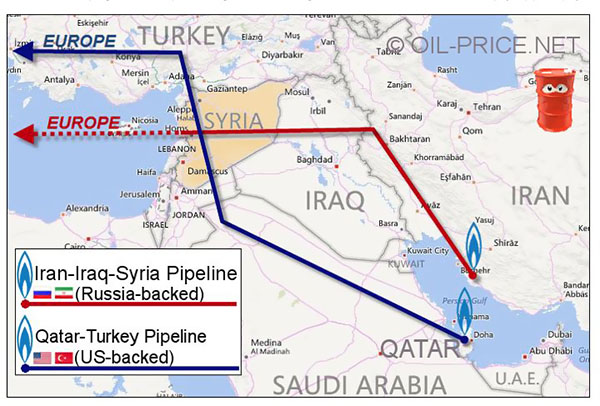
On a parallel basis, Turkey supports the economic sanctions against Syria as proposed by the Arab League. Having considered its improving relations with Syria as a key foreign policy success during the last decade, Turkey has invested heavily and solidified economic cooperation with its Arab neighbor. More than 50 agreements and memoranda of understanding in fields ranging from transportation and security to energy and water are in place, the most strategically important envisioning the irrigation of 150,000 hectares of farmland in the province of al-Hasakah using water from the Tigris river as well as the construction of a dam on the Orontes river for power generation and irrigation. The allocation and use of the Tigris River waters forms the traditional core of political and strategic considerations for Syria, therefore the sharing of benefits and expertise between the two countries presented a major shift from the intractable approach of the past. Equally important has been the agreement for the linkage of Syria’s natural gas pipeline that is part of the 1,200 kilometer “Arab Natural Gas Pipeline” that exports Egyptian natural gas to Jordan, Syria and Lebanon, with a separate line to Israel to the proposed Nabucco pipeline that crosses Turkey from central Asia into Europe, and which aims to constitute another vein that will support the Nabucco project. It is important to note that Syria purchases around 1.5 billion kilowatts of electricity from Turkey annually to meet its increasing energy needs.  

Also, trade between the two countries expanded to such levels that Turkey’s trade volume reached 1.8 billion dollars as of 2009, while investments of Turkish companies in Syria account to nearly 260 million dollars. The signing of agreements on “Preventing Double Taxation”, “the Reciprocal Stimulus and Protection of Investments” as well as the establishment of the “Free Trade Agreement” provided the legal foundations that bind the two counties and which foresee that in a 12-year period, industrial products exported from Turkey to Syria will be free from custom taxes in increments, while products entering Turkey from Syria are currently entirely free from customs taxes.
  
Therefore, Turkey’s suspension of all financial relations with Syria and the freezing of Syrian government assets in the country have the potential to cause a serious setback in bilateral trade and economic relations overall between Turkey and Syria. Syria for its part has already struck out at Turkey by placing a 30 percent tariff on Turkish imports thus increasing the prices of all Turkish products that jumped 30-40 percent overnight. In response, Turkey opened two additional crossings to Iraq in order to assist local merchants to bypass Syria in trade with the Gulf and Egypt. On a parallel basis, Turkey announced that it will stop all transactions with the Commercial Bank of Syria, except for the existing ones, and that it will halt all credit agreements signed with Eximbank to finance Syrian infrastructure projects.


Turkey’s Regional Motivations 

It is no secret that Turkey under its current leadership has invested major political capital in methodologically deepening relations with Syria and constituted a ready mediator willing to help Damascus mend its strained relations with neighbors such as Israel. Turkey has facilitated a series of Syrian-Israeli peace talks that ended in December 2008 with the main focus on that if Syria were able to achieve peace with “security” and obtain greater US and Turkish involvement, it might be willing to pull away from Iran’s orbit. Therefore, the change in Turkey’s posture toward Israel has been largely a tool to advance the country’s re-orientation rather than any sense in its cause. The decline of Turkey’s relationship with Israel that started in Davos in response to Israel's December 2008 invasion of Gaza and later on over the flotilla episode aboard the Mavi Marmara provided the basis for Turkey’s ambitious regional agenda, one that primarily targets Iranian posture.  

The motives of the unfolding Turkish policy vis-à-vis Syria lie behind its commitment to re-affirm Turkey’s close relationship with the US and its intention to outweigh Iranian regional influence. The rivalry between Sunni Turkey and Shia Iran is not new. On the contrary, it is historically rooted since Turkey and Iran are widely viewed as the diminished heirs of two major competing Muslim empires, the Sunni Ottoman Empire and the Shiite Safavid Empire, and this rivalry has currently evolved to the egos level of Turkish Prime Minister Erdogan and Iranian President Ahmadinejad.
 
In certain aspects, Syria seems to have become the focus of the Iranian-Turkish rivalry that largely touches upon the interests and expectations of regional countries and the West. Specifically, regional countries like Saudi Arabia, Qatar and Bahrain that maintain large Shia minorities have invested heavily in putting forward Arab League sanctions against Syria and support the increasing role of Turkey in intra-Arab affairs since they view the Syrian crisis as a golden opportunity to diminish Iranian influence and posture in the heart of the Middle East. According to the Gulf States perspective, Iran anticipates that Shiite groups in the GCC states are frustrated by their failure to establish democracy and impose limits on authoritarian rule and therefore it is a matter of time for these groups to turn to the Iranian “big brother” for support.
  
Upon this line of thought, an Iraqi official who meets with Iranian policymakers on a regular basis has claimed that a group in Iran announced a project involving “national Shia security”, and examines “the Jewish experiment in exporting their idea slowly and calmly,” apparently a reference to international Zionist organizations’ role in advocating pro-Israel interests. The Shia protests in Bahrain in the midst of the Arab spring were portrayed by the Gulf states as a sectarian Shia plot indicative of the fear of the expanded Iranian and Shia influence on the predominantly Sunni Arab world, and not as a discontent stemmed chiefly from their lower standard of living, unofficial exclusion from sensitive government positions, and Sunni domination of parliament. Gulf States widely perceived that a possible overthrow of the monarchy in Bahrain whose 70 per cent of the population is Shia could serve as springboard for Iranian ambitions that perceive Bahrain as the 14th province of Iran. The Gulf States’ interests coincide with those of the West and Turkey since Iranian dominance is also perceived as posing a strategic threat to vital security assets. For example, Bahrain hosts the Naval Support Activity Bahrain (NSA Bahrain) and the US Navy 5th fleet headquarters. Literally located in the heart of the Gulf, the naval base and the headquarters are a key strategic asset for the US presence in the wider Middle East, as they permit the overlooking of the oil installations and trade routes, the support of the US forces in Iraq and Afghanistan and the fight against naval piracy in the Red and the Arabian Seas. 

It is in this geopolitical framework that Turkey aspiring to broaden its horizons has got itself deeply into the waters of the Syrian crisis to diminish the Iranian influence and present itself as the neo-ottoman mediator and defender of the larger Sunni Muslim neighbourhood, with the ultimate aim to serve as the anchor for a new geopolitical alignment. Turkish Foreign Minister Ahmed Davutogolu admitted in the recent past that “rather what we (Turkey) are trying to do is to contribute to the establishment of a permanent peace in our region. If by order this is Pax Ottomana, Pax in the meaning of order, we (Turkey) are trying to establish an order, it is not wrong to say such thing”.
  
The Turkish rivalry with Iran seems to take into account its regional ambitions for establishing a regional order with a watchful eye on the interests of greater outside powers. By encircling diplomatically and possibly militarily Syria, Turkey estimates that Iraq and Lebanon will follow suit and thus a coincidence of Western and Turkish interests will empower the regional leadership role of Turkey with the blessing of the former. Undoubtedly, Iraq presents an arena of Turkish-Iranian competition and Western interests where the Shia-Sunni divide is dominant and where the Iranian influence has extended over religious Shia political parties that shape Iraqi politics at the national level and at the provincial and local levels in central and southern Iraq. Lebanon for its part is largely perceived as the satellite of Iran and therefore Turkey concerns about further consolidation of Iranian influence near its borders through the enhanced power of Hezbollah.  


Turkey’s Domestic Agenda and Its Relevance to Syria 

There has been a certain degree of artistry by the Turkish leadership in tilting Turkey towards the Middle East with the redefinition of its domestic priorities and politics. Though few expected that the EU will embrace Turkey membership, a Turkish ambition viewed according to a former Jordanian Foreign minister more like the hope of the devil in heaven, Turkish Prime Minister Erdogan exploited the profound EU rejection to undermine Ataturk’s Westernizing legacy and to pursue an ambitious domestic agenda. 
  
Having realized the urgent need to address the issue of Turkey’s minorities and of a non-military solution to the Kurdish problem, with a clear distinction between meeting the needs of the Kurdish population and defeating the Kurdistan’s Workers Party, the PKK, Turkey advertised the so-called National Unity project whose nature directed towards the country’s minority groups most prominently the Kurds and the Alevis that maintain a significant presence in neighboring countries like Syria.
  
The Turkish government’s initial efforts to reach out to the Kurds to calm the turbulent internal front have become futile. The early encouragement to start using the Kurdish language in the political and public arenas was widely accepted by the Kurds along with the Turkish government’s agreement to receive a group of Kurdish returnees from Northern Iraq in 2009. Reforms and gestures towards the Kurdish ethnic minority were accredited to the National Unity project indicating that democratization is part of the solution to the Kurdish issue to finally defeat Kurdish separatists. The argument that the strengthening of the society leads to a strong state did not go hand in hand with reforming the constitution to recognize that Turkey has certain minorities whose rights of religion and freedom of expression are secured.  
  
On a parallel basis, the outline of a roadmap for an opening to the Alevis viewed as adherents of a form of Islam influenced by Shiism and Sufism was a major aspect of the National Unity project. The Turkish government sponsored a series of workshops to address Alevi issues that pertained to granting cem houses the status of worship places, opening a special institute to train Alevi clerics, and supporting financially the operational costs of the cem houses. Nevertheless, the opening has not gained any traction due to lack of genuine engagement with Alevi organizations except for Eyli Beyt widely seen as in bed with the Turkish government. Alevis remained largely skeptical to the project as evidenced in a survey conducted by the Eurasian Public Research Center which showed that 33.9 percent supported that they are target of permanent discrimination, while only 11 percent believed that the Turkish government was sincere with its National Unity Project.
     
The Turkish government’s initial plans to reach out to the Kurds and the Alevis led to increasing criticism of the project by all segments of the Turkish media and the political groups, thus de-generating the initial debate, and prompting the Turkish government to abandon its rhetoric about the National Unity project.  

Coming to today’s critical situation in Syria and the conflicting relationship of Turkey with its once close ally, there are increasing worries that the former is in position to exploit the Kurdish and Alevi cards to create instability to the latter’s domestic front. The inability of Turkey to apply the “zero problems/conflicts policy” with neighbors to its own Southeast with the promotion of the National Unity project may prove, under the current circumstances, detrimental to its national interests. The Turkish leadership’s recent threats to increase its military presence across the Syrian border may be insufficient to deter Syria and Iran from subversively supporting Kurdish separatists, while the Prime Minister’s late November 2011 apology for expulsions and massacres against Alevis in the Eastern province of Dersim in 1937-1939 was perceived as provocative affront to the Alevis.

For a comprehensive opening, Turkey needs to have proceeded with the implementation of effective policies that would have over the long-term improved the economic, political and cultural life of Turkey’s Kurds and Alevis, therefore preventing their exploitation by regional players. The interview of President Assad at the Syrian TV on August 21, 2011 sent a concrete message to all directions with Turkey being considered as the main recipient according to which “The consequences of any action against Syria would exceed by far what they could possibly bear for two reasons. First, the geopolitical position of Syria and second, the Syrian capabilities only some of which they would be able to bear… The countries that make threats are themselves weak politically and socially. They are weak, much weaker than in the past”. Looking at Turkey’s domestic front, one cannot help but see that nowadays it has to deal with the landscape it faces not aesthetically but pragmatically to meet emerging challenges. 


Thursday, February 9, 2012

“Towards a New Middle East? A Geopolitical Analysis and Prospective”.

Intervention during a discussion on the geopolitical aspects of the Middle East.


Where: Center for Strategic Studies – مركز الدراسات الاستراتيجية


Presented by: Dr. Aymeric Chauprade; a Professor of Political Science in France (Sorbonne) and Switzerland (2001 -2009). Currently, he works as a Professor at The Institute of Higher Studies of French National Defence.

Thursday, November 17, 2011

The Israeli-Jordanian Peace Treaty as a Starting Point for Thinking Creatively about a WMD Free Zone in the Middle East

(Photo from Wikipedeia)


By Antonia Dimou


The idea of arms control is not foreign in the Arab-Israeli conflict. Through time, Egypt, Israel, and Jordan have agreed to a variety of arms control and confidence building measures with regards to disengagement of their forces, demilitarization, and limitation of forces agreements. In this context, the Jordan-Israel peace treaty incorporates a number of arms control measures which address the security concerns of each side and provides a blueprint of genuine partnership for peace in the regional context. Israel's treaties with Egypt and Jordan shows that "full peace" is a relative term that varies in content and has evolved over time.


While the intricate and intrusive Sinai military arrangements are the key to what the Egypt-Israel agreement posits as "maximum security," the Jordan-Israel agreement offers "good neighbourly relations and cooperation" as the true source of "lasting security." In practical terms, this includes cooperation on both a bilateral basis for e.g. to combat terrorism and prevent cross-border infiltration, and on a regional basis with the aim to create a Conference of Security and Cooperation in the Middle East, and a regional zone free from weapons of mass destruction.


Specifically, according to Article 7, the parties “undertake to work as a matter of priority, and as soon as possible, in the context of the Multilateral Working Group on Arms Control and Regional Security, and jointly, towards the creation of a Middle East free from weapons of mass destruction, both conventional and non-conventional, in the context of a comprehensive, lasting and stable peace, characterized by the renunciation of the use of force, and by reconciliation and good will.” Also, according to par.3 article A, both parties undertake “to refrain from the threat of use of force or weapons, conventional, non-conventional or of any other kind, against each other, or of other actions or activities that adversely affect the security of the other Party”.


From the start of the multilaterals, Jordan has advocated the need for a new regional institutional framework to support the objectives and reinforce arms control talks. After a series of talks throughout 1994 the idea of setting up a regional security center with headquarters in Amman as a venue for seminars and training on arms control and regional security was endorsed. Since 1995 when the ACRS Group, the only formal regional arms control mechanism halted, the role of Jordanian civil society in promoting the establishment of a WMDFZ in the region has been critical as the only forum for regular dialogue on non-proliferation and arms control issues.


The Middle East Scientific Institute for Security (MESIS) previously known as the Cooperative Monitoring Center associated with the Royal Scientific Society was established in 2002 in Amman jointly with the US Department of Energy and Sandia National Laboratories. The institute’s activities include conducting studies with regional experts on technical aspects of arms control with the aim of reducing the motivation of regional states to acquire WMD. It hosts workshops on regional biosecurity and biosafety and on approaches to national implementation of WMD agreements. Also, the Middle East Security Consultants (MESC) established in January 2011 in Amman includes a group of experts whose main focus is on the political developments of the Arab World, the future Arab-Israeli relations, and Nuclear, Biological and Chemical (NBC) proliferation.


Equally significant is the role of the El Hassan Science City (EHSC) located in Amman that has established a strong relationship with the Comprehensive Nuclear-Test-Ban Treaty Organization (CTBTO) and supports the efforts of the organisation to ensure that testing of nuclear weapons is banned in all its forms. Upon the logic that the organization is central to global and regional disarmament and non-proliferation efforts, Jordan has given a home to the CTBTO auxiliary seismic station at Tel al- Asfar, which has been in operation since 2002.


Jordan supported the resolution on the Middle East adopted by the 1995 Review and Extension Conference, which had been “… the basis on which the Treaty was indefinitely extended”. In fact, Jordan was among the Arab countries that joined consensus in exchange for a call on “all states in the Middle East, including Israel, to take practical steps….aimed at making progress towards….an effectively verifiable Middle East zone free of WMD and their delivery systems”, and on “all states party to the NPT to assure the early establishment by regional countries of such a zone”.


The relationship between the Middle East WMDFZ and a regional peace agreement has gained much debate. For Israel, a comprehensive agreement must precede the establishment of the zone. This linkage was also acknowledged in the 1995 NPT Middle East Resolution albeit in a subtle manner. Since the weapons build upon the region is consequence of the conflict and tensions between regional states, the root causes of the conflict must be addressed as a priority. The Arab position that a WMDFZ should be established prior to a comprehensive peace settlement is not accepted by Israel. To Israel peace comes first, and denuclearisation last. In a way, this concept is embedded in the Jordanian-Israeli peace treaty that speaks for a WMDFZ as a goal “to be achieved in the context of a comprehensive, lasting and stable peace”.


It seems that there are two major prerequisites for any negotiation on a WMDFZ to be successful; First, better knowledge of the risk assessment, strategic and threat perceptions of the various regional players. National security has been perceived as a zero-sum game, wherein gains for one side have been viewed as constituting a potential threat to the other. There has been little recognition that arms control or arms reductions and the search for political agreements in this area would serve either national or mutual interests. On the contrary, when considering its regional environment, each state may come to the conclusion that its national security requires increasing its own level of armaments or even turning to WMD. For instance, Israel considers itself under an existential threat from Iran, but Iran feels threatened by Israeli capabilities and cannot ignore the presence of US forces or bases in most of its neighbour­hood.


Second, there is need to increase the regional flow of informa­tion, regarding military spending and arms transfers, and to develop confidence and security-build­ing measures. The collection, by an impar­tial body, of data related to military budgets, transfers, and non-proliferation measures can be a first necessary step towards disarmament in a WMDFZ.


Jordan is a strong advocate of a WMDFZ that rids the region from the threats of using these weapons. It is noteworthy that in 2004, the kingdom had become target of a terrorist organisation that planned t to unleash a Chemical Weapons attack within Jordanian proper. Specifically, Jordanian authorities captured trucks with 20 tons of chemicals like Vx nerve agent and explosives planned to cause explosions that would have dispersed the toxic chemicals and would have killed as many as 20,000 people. The planned chemical attack on Jordan has re-configured the whole WMD debate inside the kingdom.


Nowadays, Jordan has declared its interest in acquiring nuclear power, a policy not embarked in response to Israel’s supposed nuclear capabilities. Jordan’s planning to utilize nuclear power and pursue its nuclear program is driven by economic considerations including the use of nuclear power as a source of energy and to produce desalinated water much needed for a country with limited natural resources and an expanding population.


The need for energy security seems to sit with a deep fear of having nuclear capable countries in the Middle East. This should not be the case. The nuclear agenda in the region has flipped from military to socio-economic in most of the political thinking of regional governments, while a raft of international agreements and protocols have enmeshed most of these governments in a peaceful, regional nuclear structure. Measures such as the IAEA Safeguards on peaceful nuclear activities, Additional Protocol measures, the Comprehensive Nuclear-Test-Ban Treaty (CTBT) and the Fissile Material Cut-Off Treaty will change the landscape with the cooperation of most regional actors.


In this regional framework, and in line with the second major prerequisite for the establishment of a WMDFZ, Jordan plans to establish a Regional Data Centre that will cooperate with the CTBTO to facilitate researchers from neighbouring countries and help preparations to implement the verification regime beyond its borders. Jordan has gained invaluable experience by establishing and expanding the first National Data Centre currently based at the Jordan Seismological Observatory, and developed rare technical expertise that can be shared with regional countries.


Additionally, in line with the Jordan-Israel peace treaty that provides for “lasting security”, Israel and Jordan periodically conduct joint earthquake exercises to practice techniques in evacuation and to test preparedness for an earthquake in the region, and/or of the simultaneous occurrence of an earthquake and nuclear disaster.


The cornerstone of establishing a Middle East WMDFZ is the political commitment of regional countries to lead this undertaking as well as institutionalized planning, systematic studies and efforts on the political, technical and legal aspects to achieve timely results. Significant track-II efforts can help produce progress on the matter, while enhancing the role of science and technology, cooperative monitoring, and action programs on the national and regional levels can all serve the ultimate goal of creating a Middle East WMDFZ.


* This article is part of a paper presented in Budapest late September 2011.